
Desperately in need of supplies, we reluctantly left our newfound favourite anchorage by Leone Islet in the Village Islands of the Broughton Archipelago. Our plan: head to Port McNeill, stock up on groceries, fuel, propane, and water, do some laundry, and return—hopefully in time to see the wolf again.
July 26, 2024


We’d ride the ebb tide north. A somewhat rare phenomenon, in these waters the ebb flows north.
As we left the Broughtons behind, two Dall’s porpoises appeared, darting playfully at the bow of the boat. I was ecstatic! It had been over a decade since I’d last seen one.


I’ll never forget my first sighting, years ago in the southern Gulf Islands near Sidney, BC. At first, I thought it was a baby orca. Then there was another. And another. But three baby orcas? Unlikely. When I got home, I looked them up and discovered Dall’s porpoises—the largest of the porpoise family (while orcas, fun fact, are actually the largest dolphins).
Each leg of this trip was a new lesson in navigation, and today’s was a big one: trust your instruments.
The “Oh Shit” Moment
I knew the ebb would create some eastward current as we exited Blackfish Sound and passed by Weynton Passage, on the west side of Stubbs Island. But my research had turned up no particular warnings—so I wasn’t expecting trouble.
Then, as we moved through the passage, I noticed something strange. My GPS showed us moving northeast, while I could see we were heading north.
“Why is my GPS acting up?” I wondered.
And then I caught myself. I took a quick manual bearing—just pointing my arm toward a fixed spot on shore—and realized, to my horror, that we were moving sideways. And fast.
Oh. Shit.
I looked to my right. The distance to Stubbs Island was closing in way too quickly, and our speed was dropping rapidly. I thought about bailing out, but turning back wouldn’t have helped—we’d still be carried sideways. Going into the current wouldn’t work in our slow boat either. But we were still making some headway, just barely.
Normally, I cruise at 1400–1600 RPM, but I gunned it to 2000 RPM. Even then, our speed over ground was just 1.5 knots. The water churned and boiled around us, but—much to my relief—we clawed our way past the island.
After all the tricky places we’d been, all the well-documented hazards and strong currents we’d navigated, this was the one that nearly got us. And nowhere had I found a single mention of it!
So, a PSA for fellow boaters: If you’re heading north past Stubbs Island on an ebb tide, take the east side!
Now I’m curious—does the east side have an equally nasty set toward the island during the flood? Something to investigate next season.
A Stop in Port McNeill & A Return to the Wild
Port McNeill turned out to be an exceptionally convenient stop for re-provisioning. We got everything done and, the next morning, retraced our route—this time taking the east side of Stubbs Island, thank you very much—before stopping in Blackfish Sound to do some fishing.
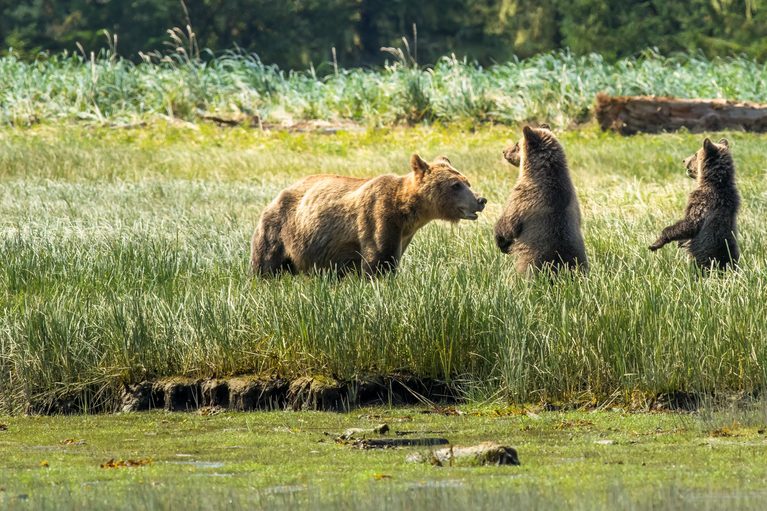
Blackfish Sound is quickly becoming one of my favourite places on the ocean. The calm, fog-shrouded waters have a mystical quality, and the abundance of life is undeniable—seabirds, eagles, seals, sea lions, humpback whales, and orcas. Not to mention the fish.


Ray and I each caught a wild coho salmon (as opposed to hatchery coho, which are marked by the absence of their adipose fin). Most of the season, anglers are required to release wild coho while being allowed to retain hatchery coho. But we were in the final days of being allowed to keep wild ones. What a treat—wild coho are hands-down the tastiest salmon.
Finding Calm at Madrona Anchorage
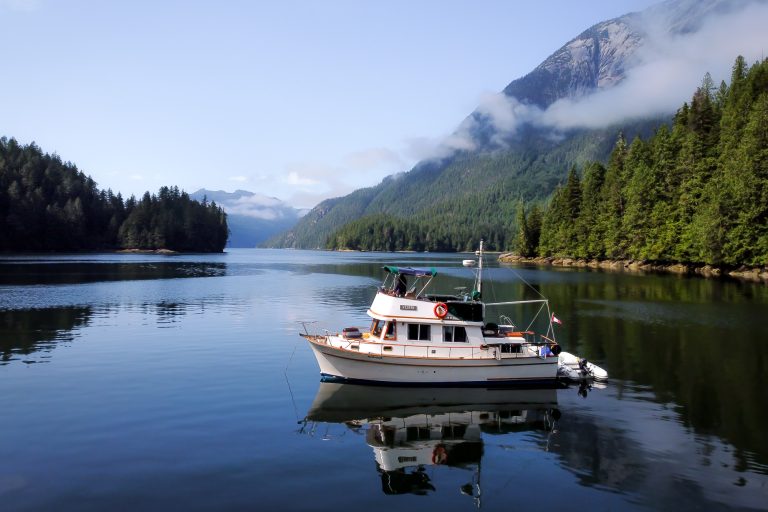
Returning to the Village Islands, we found another boat had taken our previous anchorage in front of Leone Islet. Time to improvise. We settled into the nearby Madrona Anchorage, another fantastic spot that was immediately added to our list of favourites.
We dropped anchor right in front of a massive granite cliff. It looks close in the photo below, but there was plenty of room, as you’ll see in the drone photos. I love the perspective I can get using my drone to photograph our anchorages.


A few days of rain followed, but it was worth it for the incredible still mornings and the most beautiful fog drifting among the islands.


Some of my best photos of the season came from this spot. And some of our best meals, too. Not only did we feast on our delicious coho, but we used the heads as crab bait—and landed some gorgeous Dungeness crab.
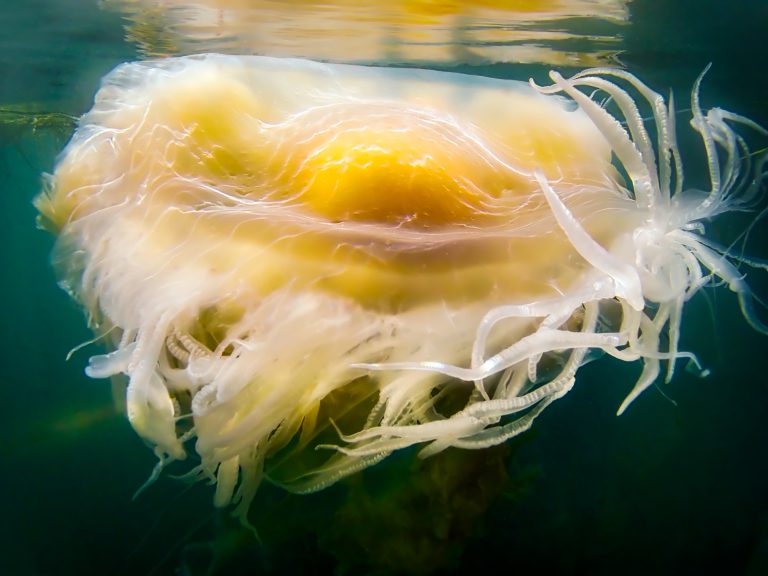
Out in the dinghy, I was able to get closer to some of the sea life and play with some more underwater photography with my action cam.


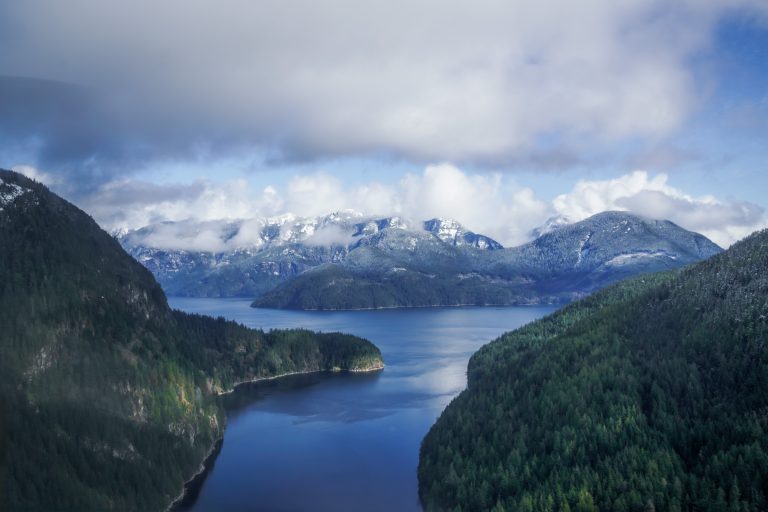
The drone captured an entirely new perspective of Madrona Anchorage—the vast granite cliffs, the maze of tiny islets, and the ever-shifting mood of the fog weaving through the islands. Along with some of my best photos of the season, my drone video below truly captures the magic of this place.
And if you want to see some behind-the-scenes footage from Ray, check it out below.
Next Stop: Kwatsi Bay
Beautiful Images, Anne. Interesting boat travels!
Thanks Bill, glad you are enjoying the posts and photos! Great to hear from you 🙂
Always a fun time reading your adventures. Well written and fun with great images.
Thank you so much Jeff, I’m happy you are enjoying the stories. I have to finish writing them before next boating season starts!
Your photos and drone videos are spectacular as usual Anne! I live vicariously through you two on your marine summers. Safe travels!
I appreciate that very much Steve. I can’t wait to get back out there again this summer for more exploring. I wonder how far we will get this year?
Just lovely Anne, especially the videos, but, stay safe huh?
I try my best John, but it’s always an adventure out there! You just never know what a day will bring.
Wow Anne. What a beautiful place! And great photo’s. Enjoyed reading the blog.
Greetings to Ray and have a save trip. And remember …. take the east side!
haha I’m always going to remember that whenever I get anywhere near Stubbs Island again! Thanks for your visit and comments Roel.