
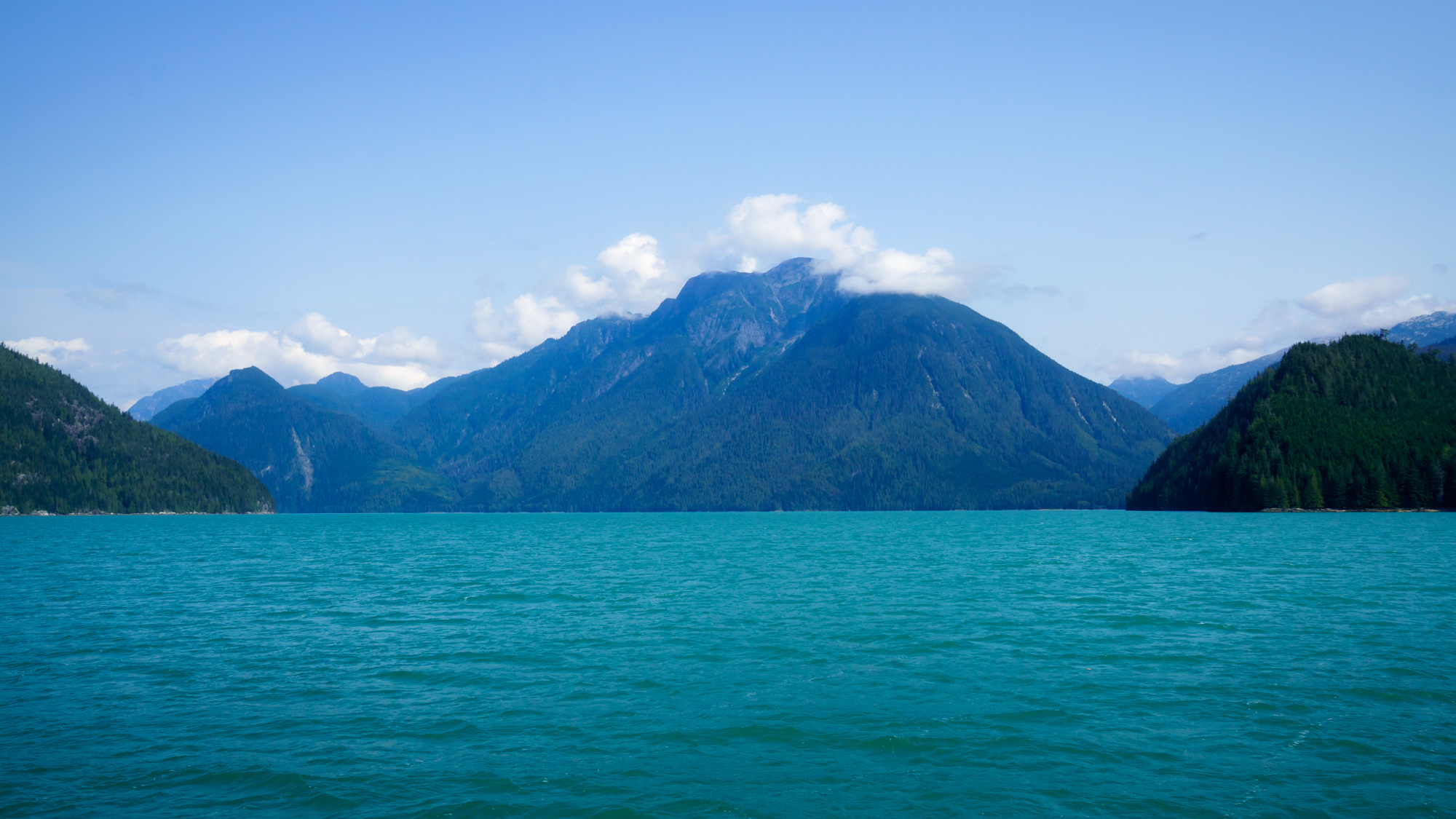
The best thing about living on board a boat in British Columbia during summer is being able to experience some of the most remote places on the coast. And being able to stay there for a while. And the wildlife. Okay, there is a lot to love about it!
But remote places come with their challenges.
One of the places I’ve wanted to go for years is Knight Inlet. It stretches more than 100 kilometres into the BC mainland and is more than 500 metres deep in places. On a boat that only goes 6 knots, going all the way to the head of the inlet is a long trip. Especially since there are very few viable anchorages once you get farther up.
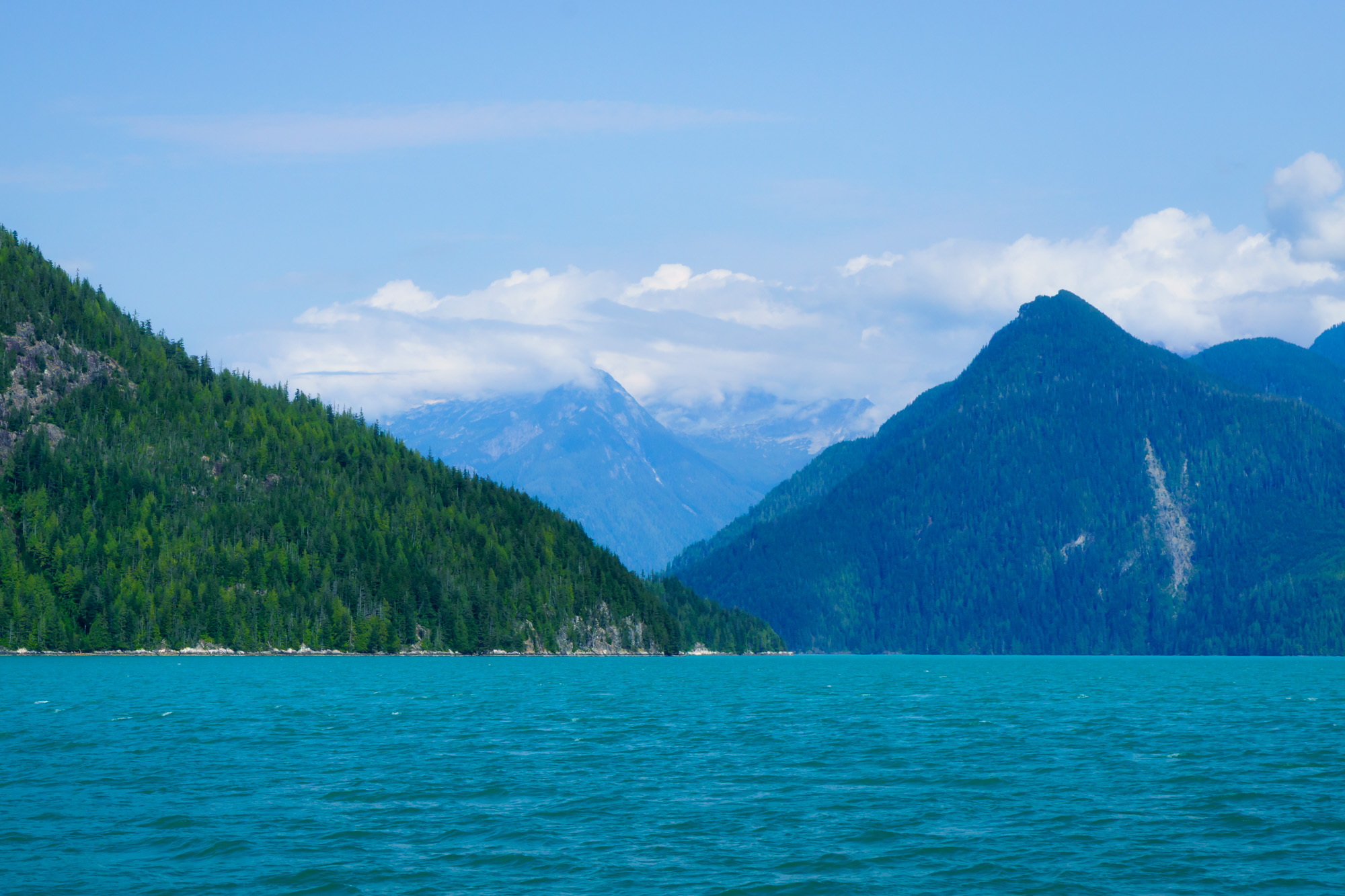
I thought I would have to take a tour in a fast boat to see it, but after doing some research and chatting with other boaters, I decided to take a chance, go halfway and attempt to anchor in Glendale Cove. Others had done it. Not always successfully, and it wasn’t always comfortable. But I wanted to try. Specifically because Glendale Cove is home to a stunning estuary that is popular with grizzly bears.
Afternoon winds tend to pick up in the inlet, which meant anchoring had to work. There would be no time to go back.
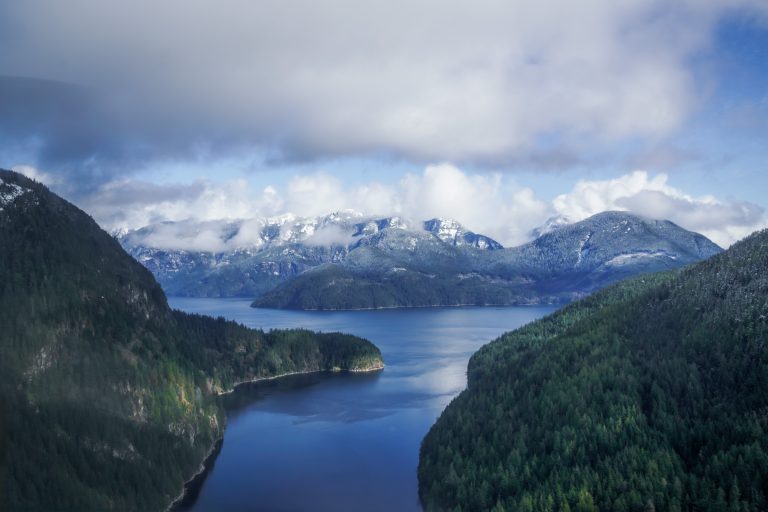
We had a glorious trip up the inlet. The mountains rose almost straight out of the water, disappearing into low clouds and mist above that strange milky green water you find in glacier-fed inlets.
We found a good spot with adequate depth to anchor just inside MacDonald Point. I wouldn’t call it comfortable though. All three nights we were there, rollers came through the anchorage until about 1am when things finally calmed down enough to get some sleep.
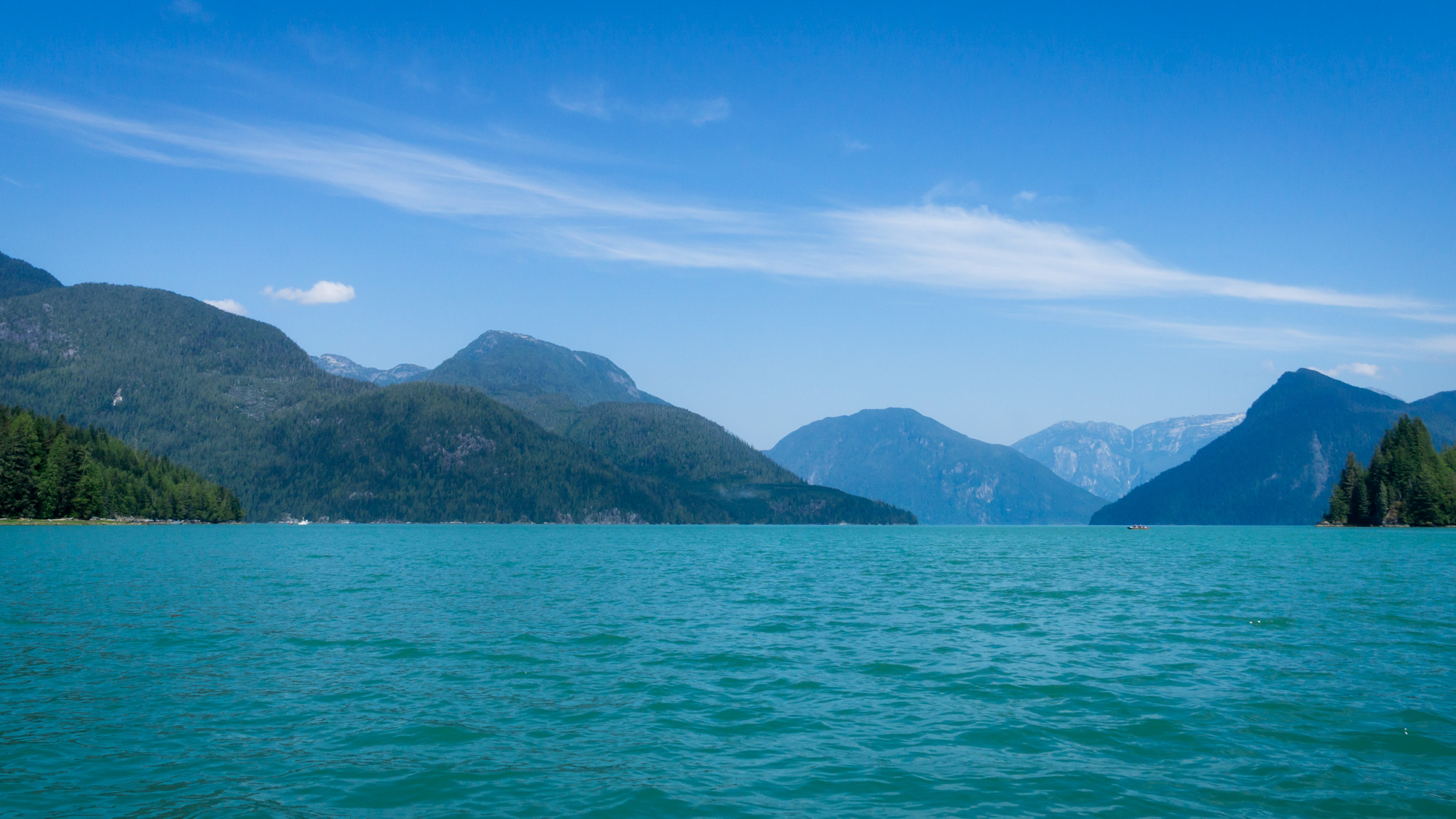
In the photo below, Vestri at anchor is nothing more than a tiny white speck along the waterline. Look carefully, she’s there on the left. I love this photo because it shows the scale of the place better than I could ever describe it. Knight Inlet made us feel very small.
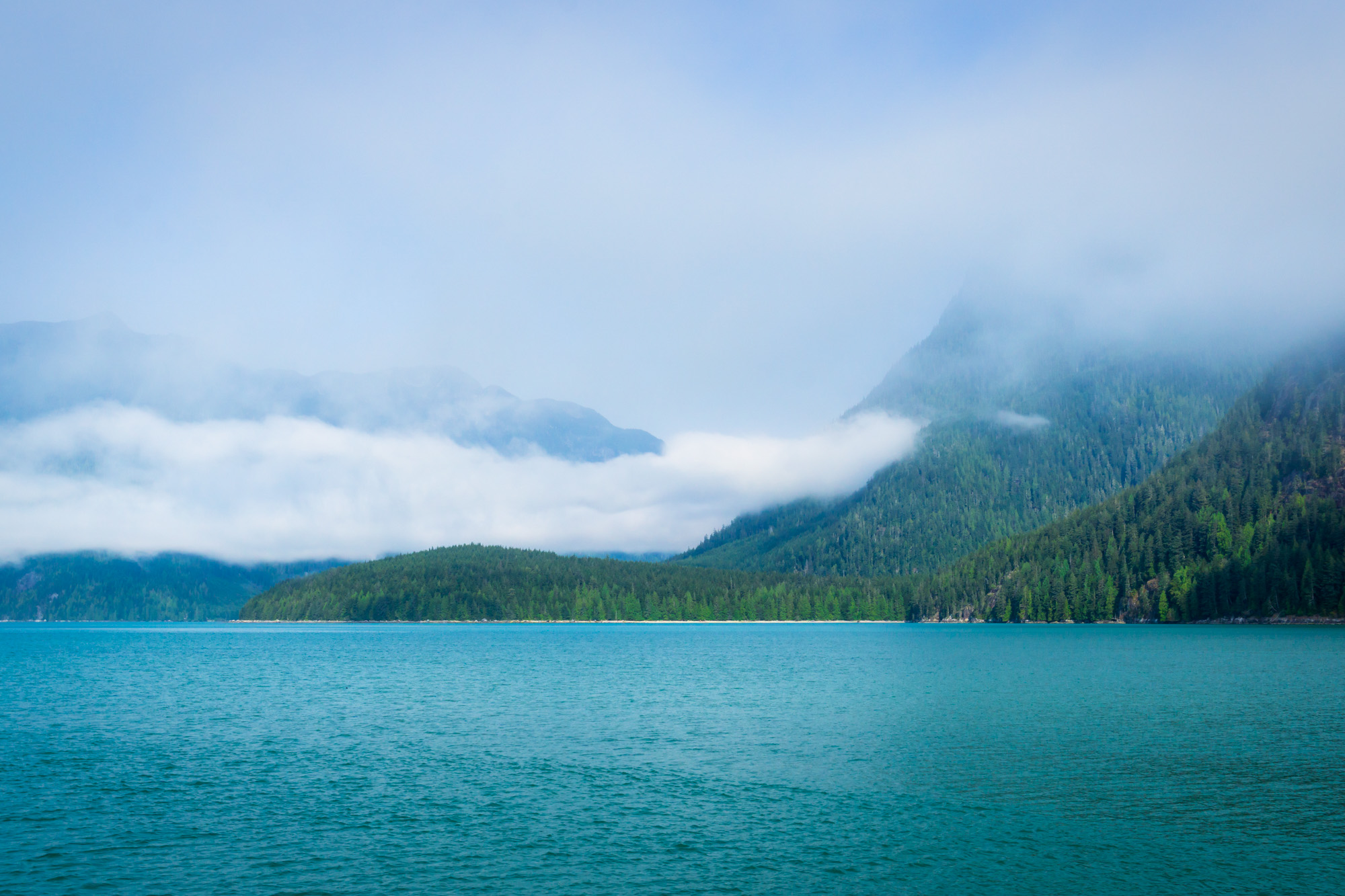
And there was so much to photograph before we ever got anywhere near the bears. Moody clouds wrapped around the mountains, mist drifted through the valleys, and in the mornings the sun slowly came over the mountains and lit the inlet from behind.
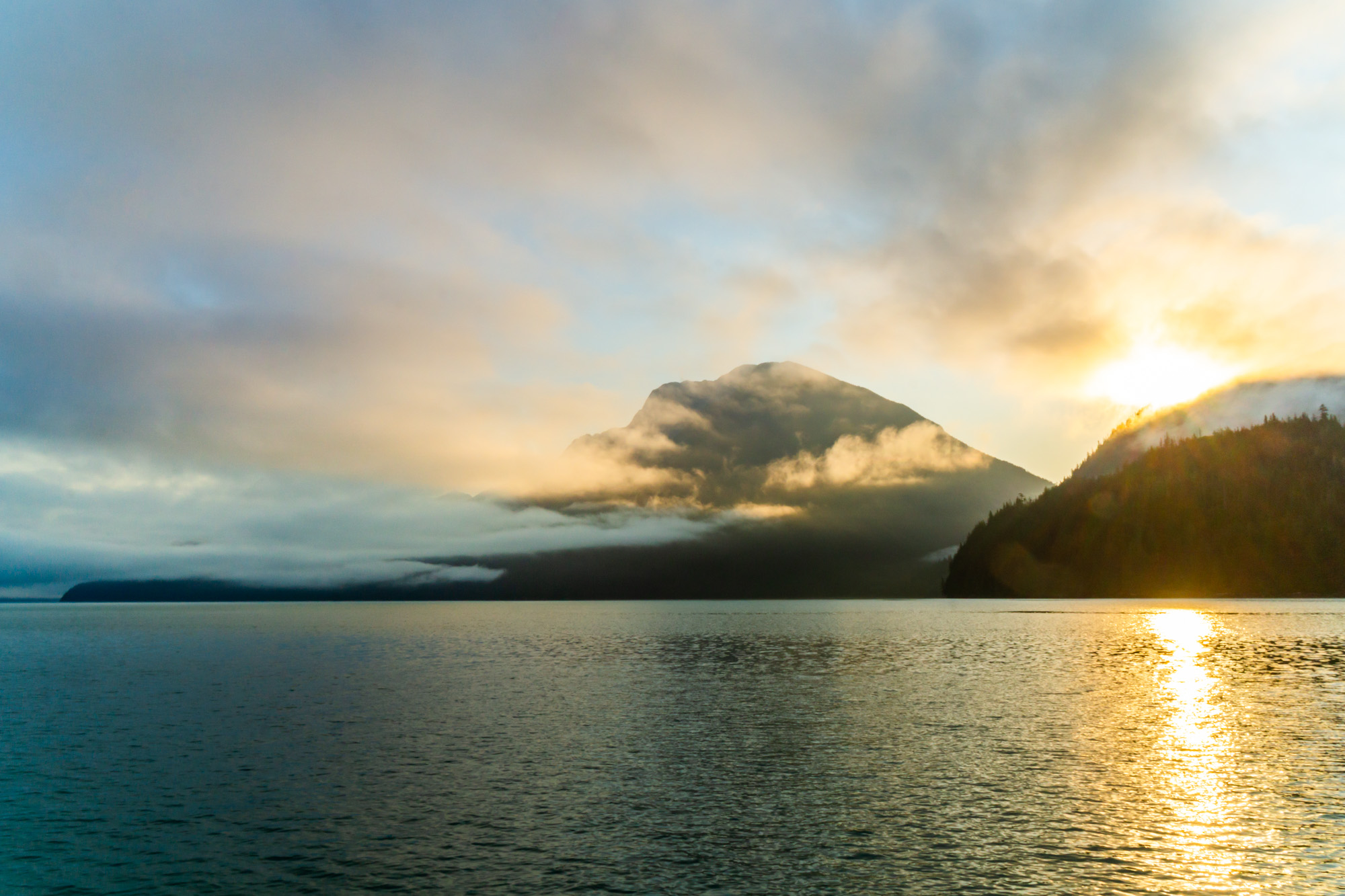
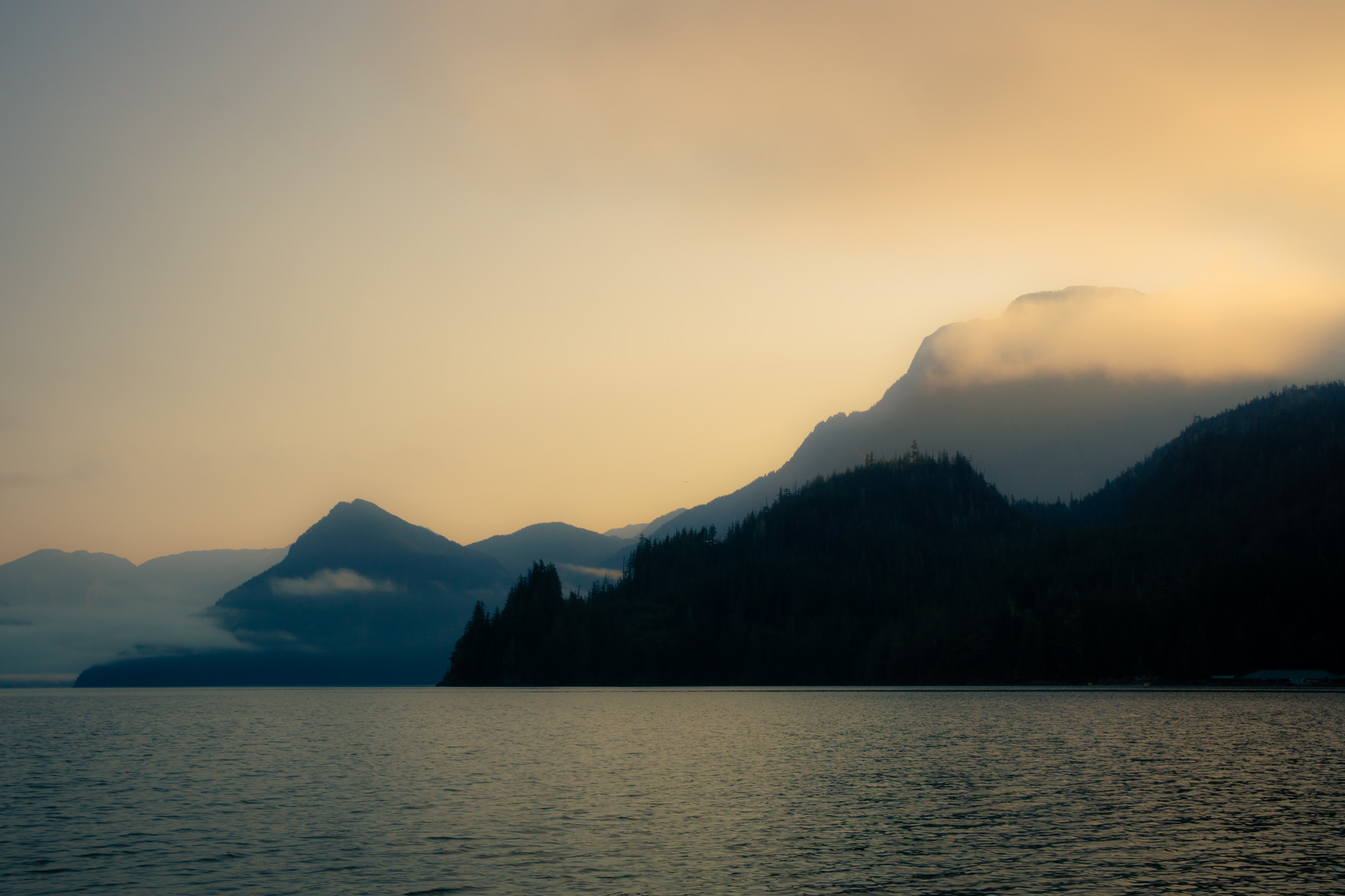
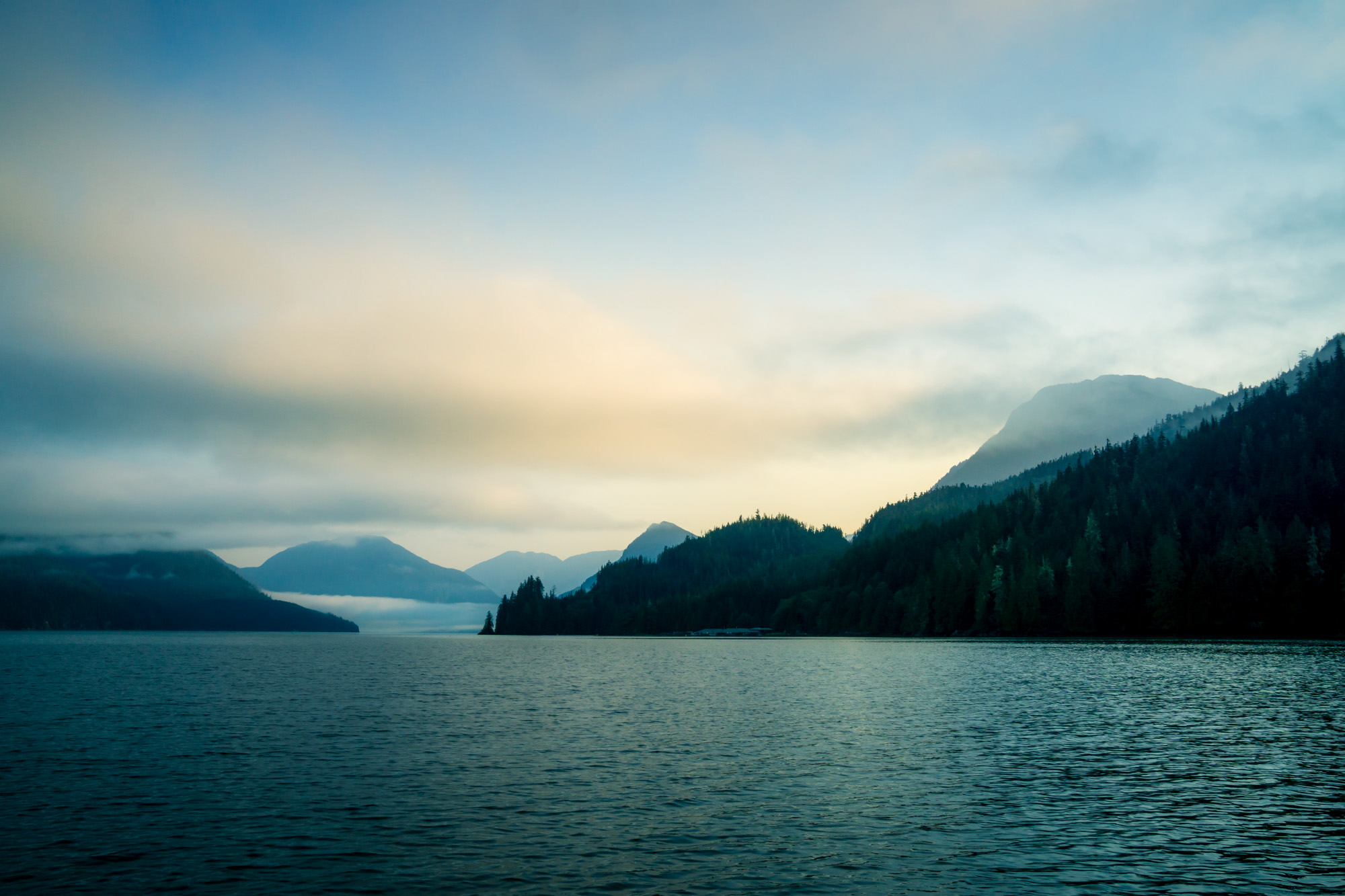
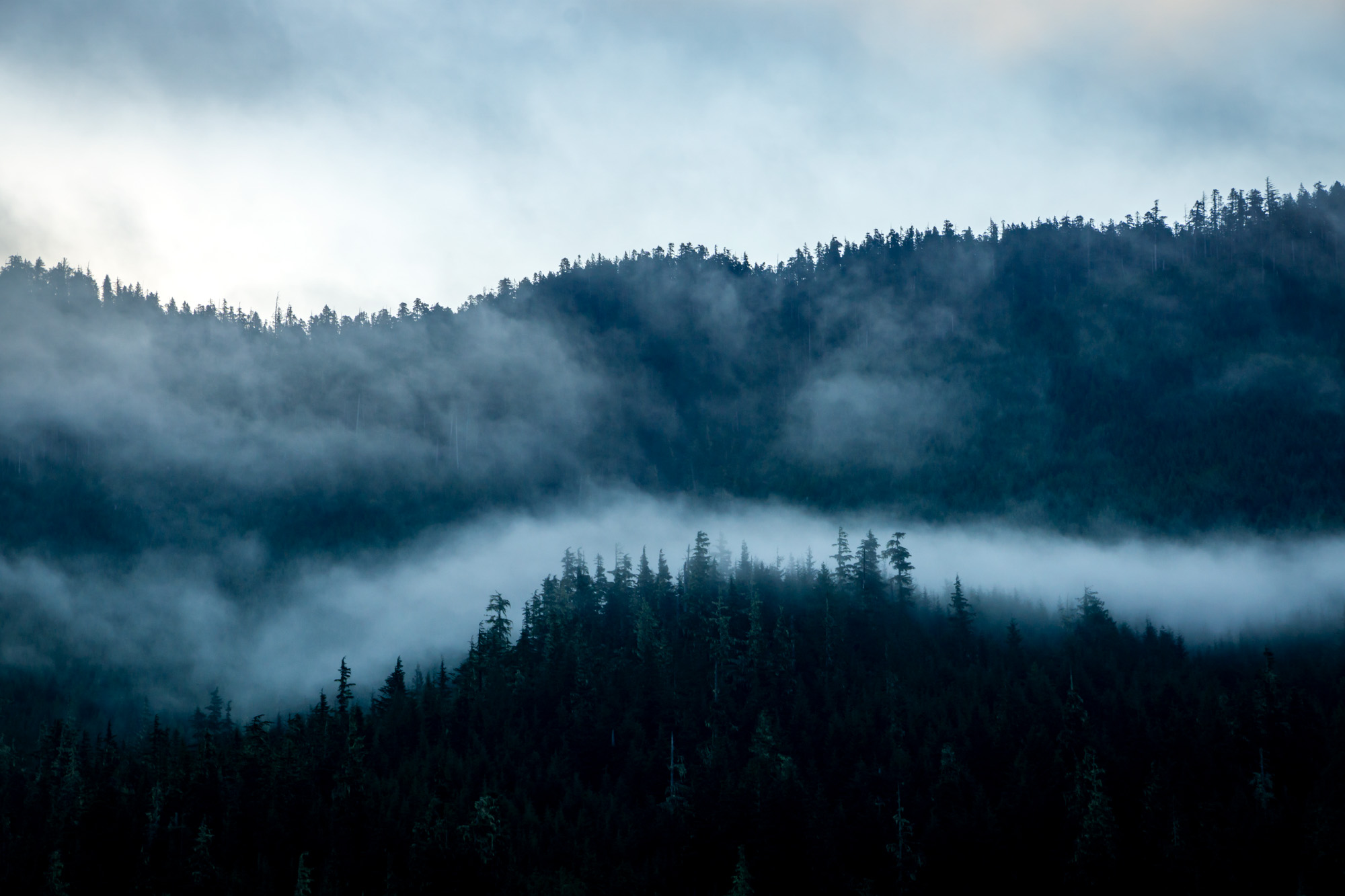
Other mornings were so cloudy you couldn’t even see the mountains, but the calm water and the mist gave the place a whole different feeling.
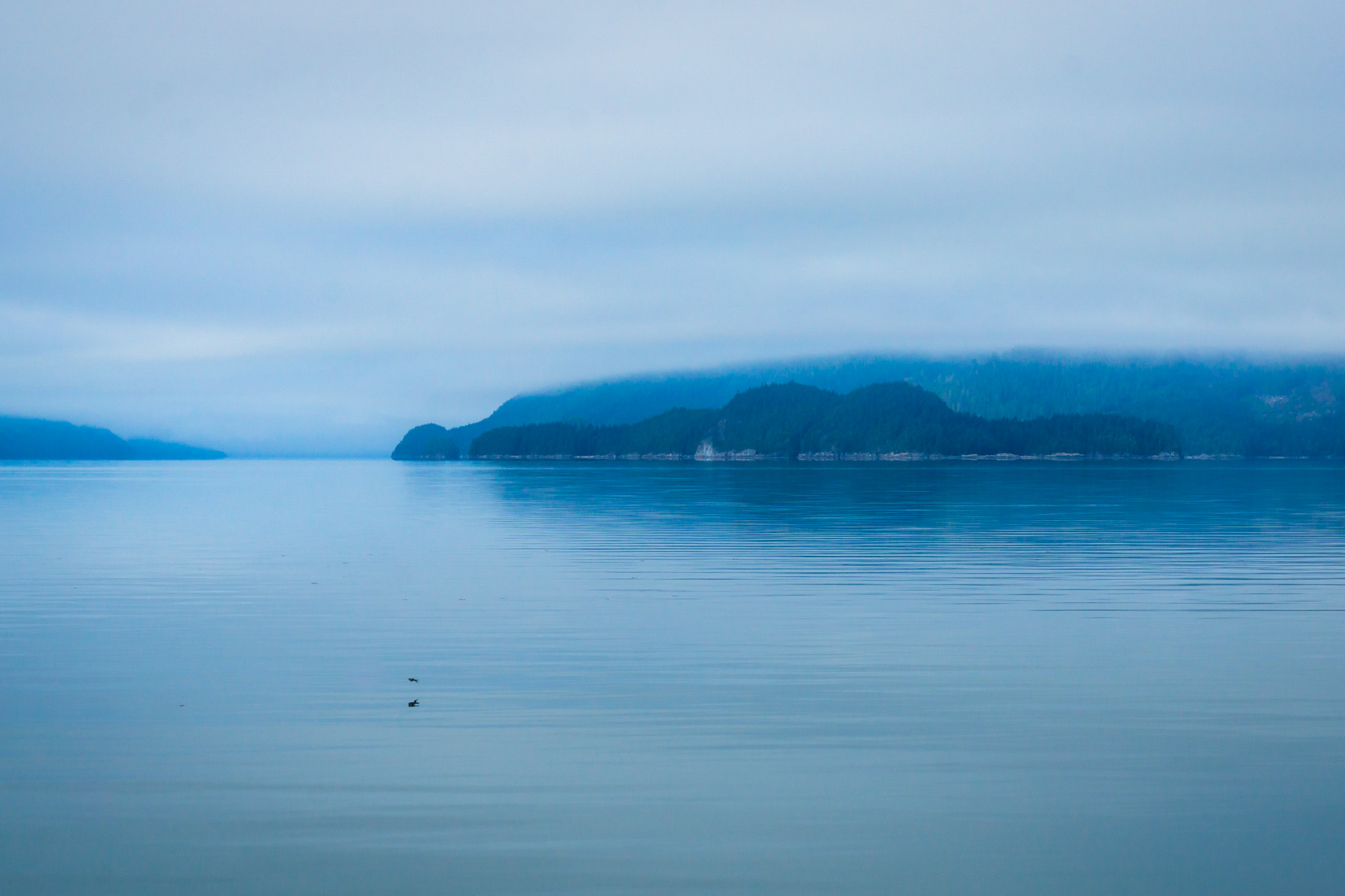
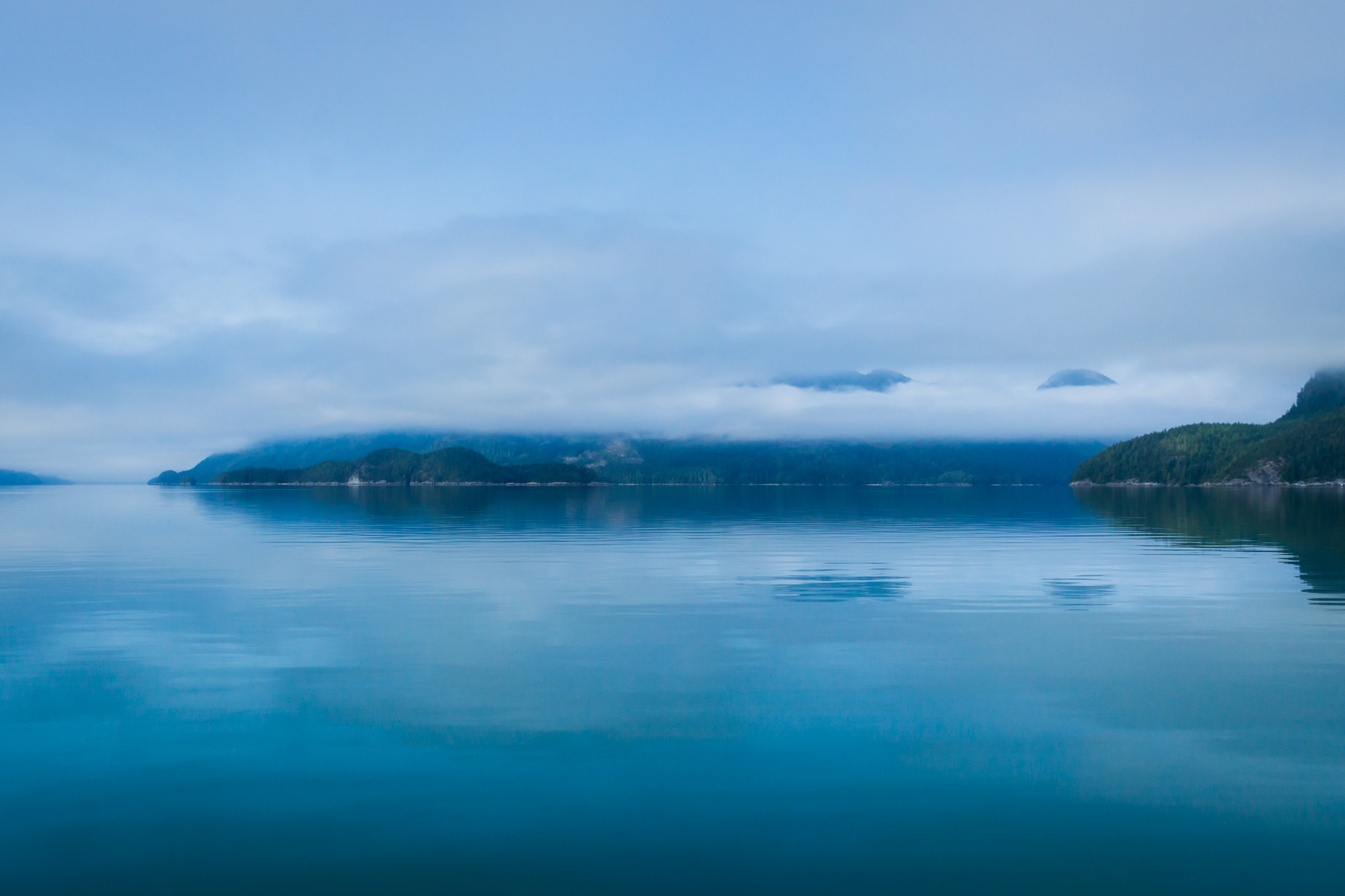
After we made it through the first night without problems, we were willing to leave the boat for a few hours and take the dinghy up the estuary to visit the bears. Even without bears, the estuary was spectacular.
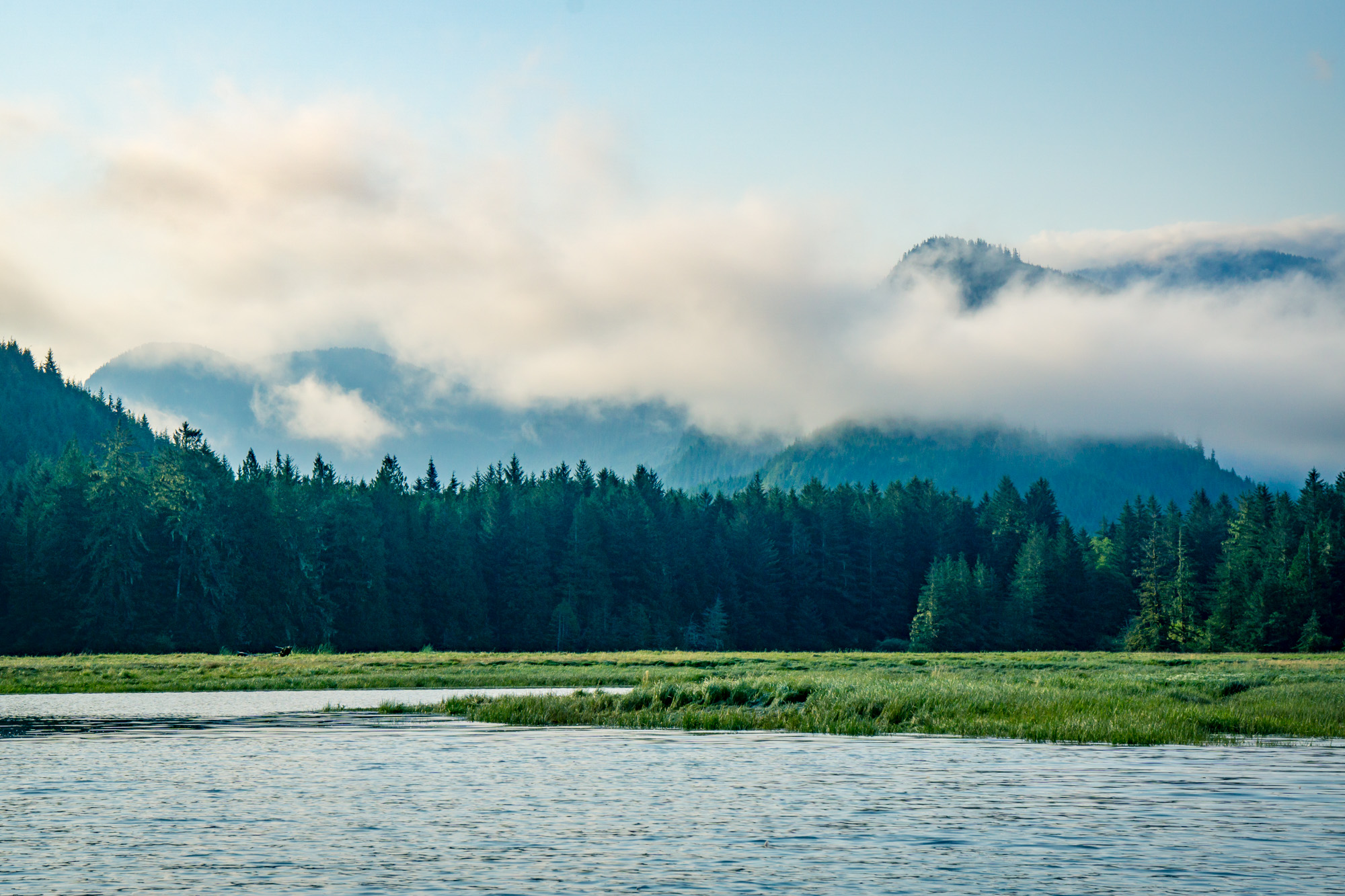
We paddled up, and waited around for quite a while, enjoying the peace and the view until finally some bears came. A mother and two cubs. What a treat! To be alone in the wilderness, just us two and the bears, was such an incredible wildlife experience.
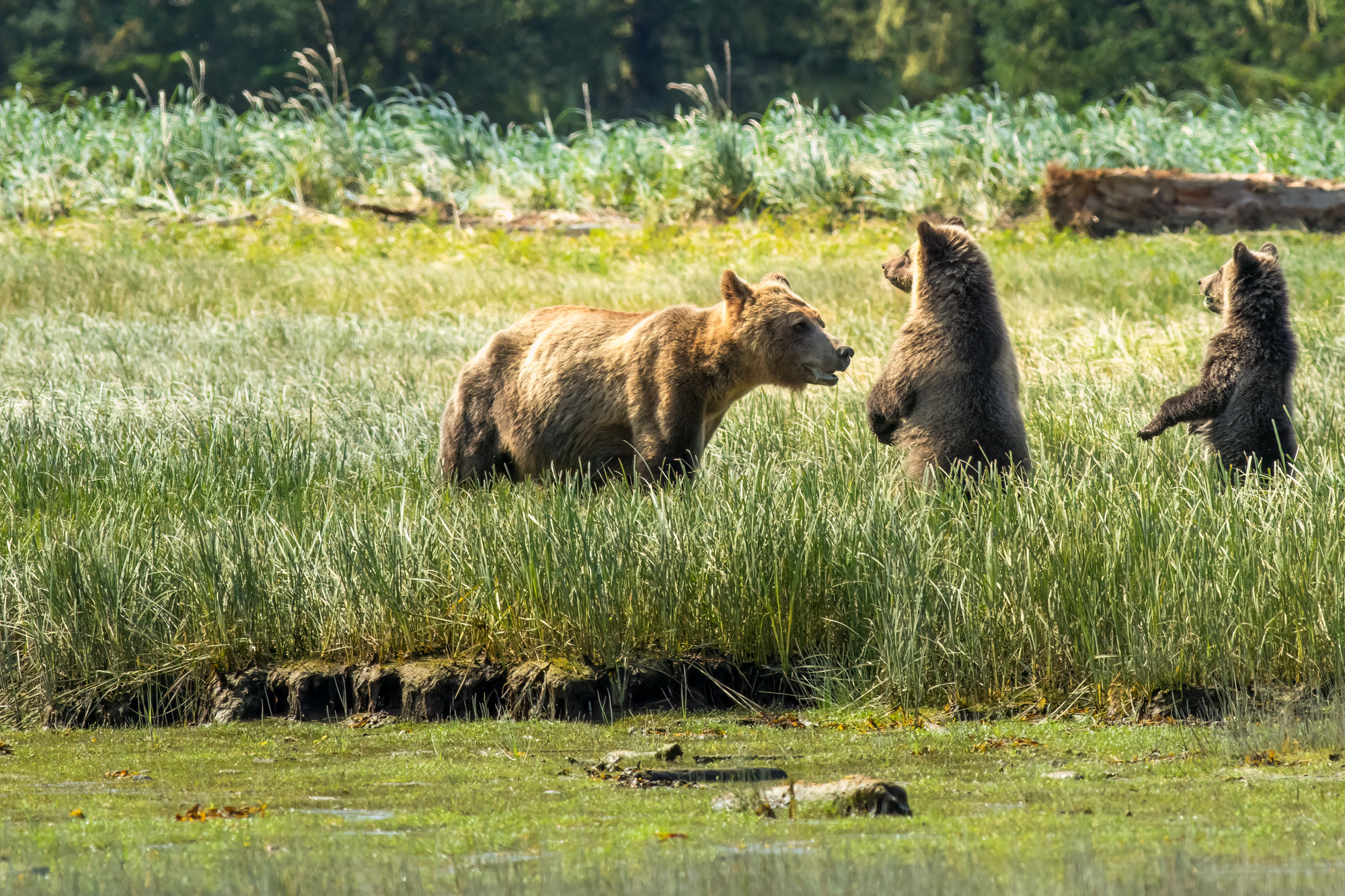
They started wandering slowly through the grasses toward a narrow channel of water. I started whispering, “Cross the river, cross the river,” even though I didn’t really expect them to do it.
But I was ready just in case.
The mother crossed first, leaving the two cubs on the other side. At that point, I knew it was only a matter of time.
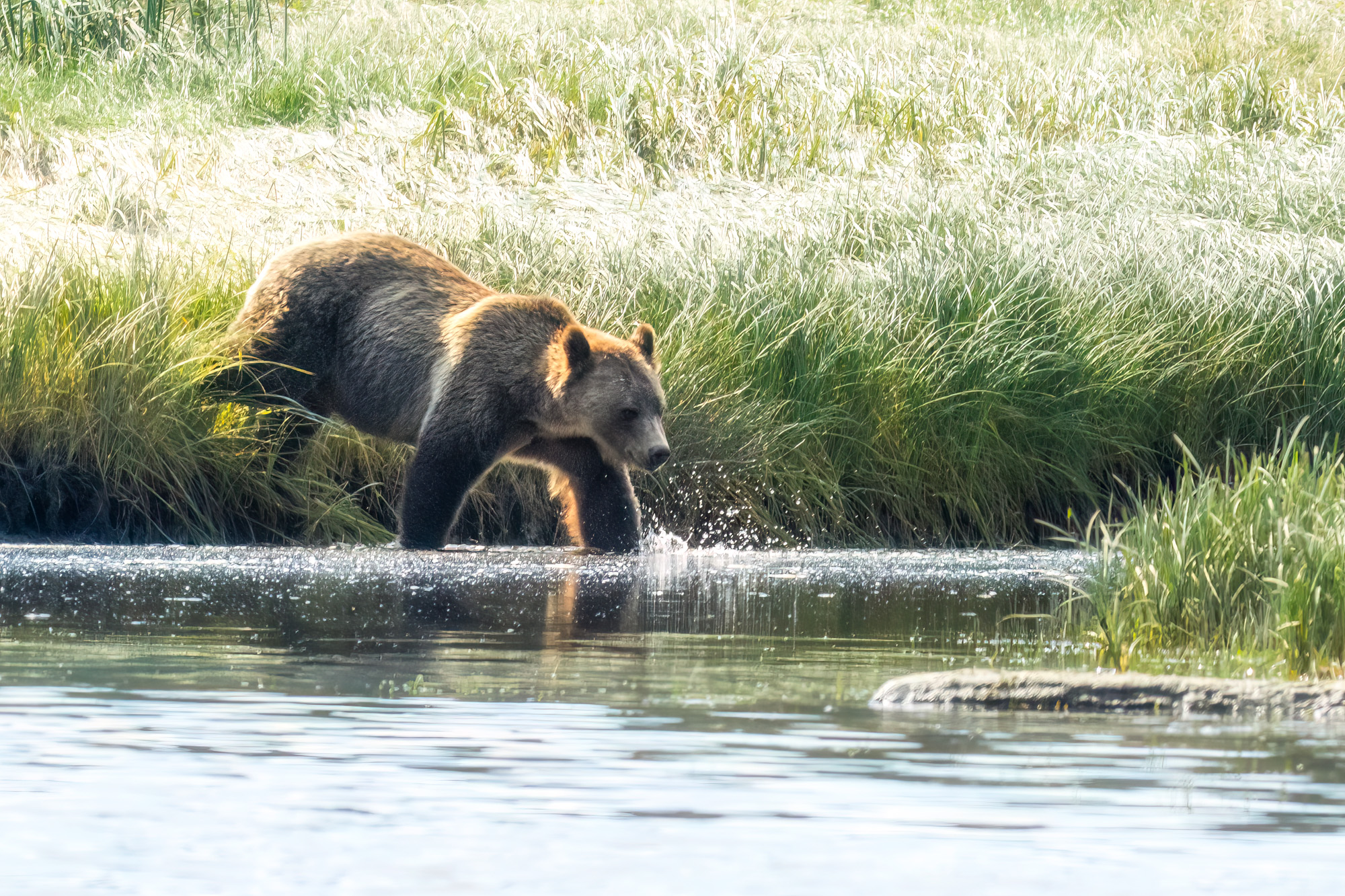
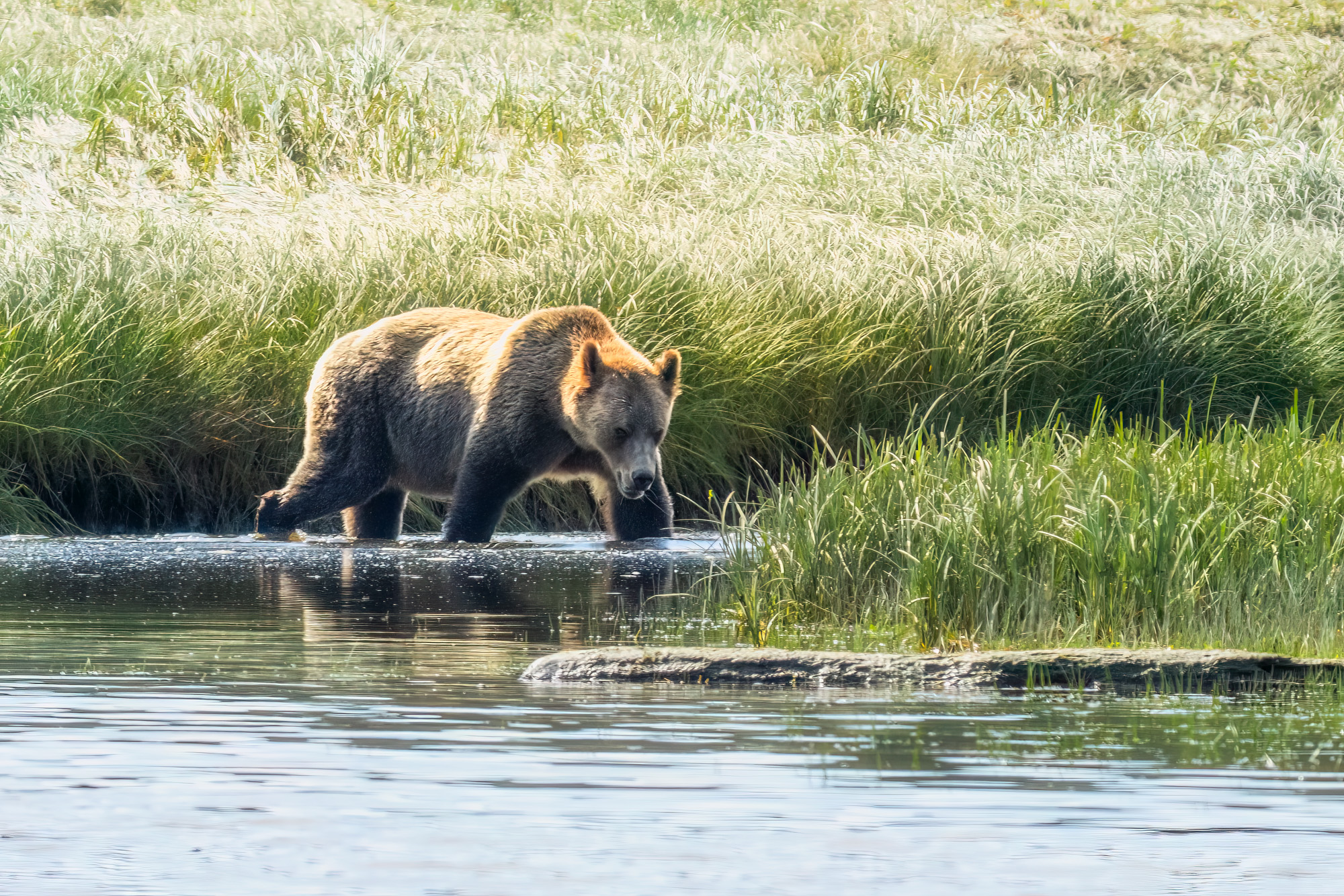
This is one of those things about wildlife photography that nobody really talks about. Sometimes the hard part isn’t reacting quickly. It’s being willing to hold the camera in position and wait.
And wait.
My arm started to ache from holding it up, my finger on the shutter, even though I was using a monopod. I didn’t want to lower it even for a few seconds. I knew that would probably be the exact moment the cubs decided to move.
Then it happened.
The two cubs crossed the river.
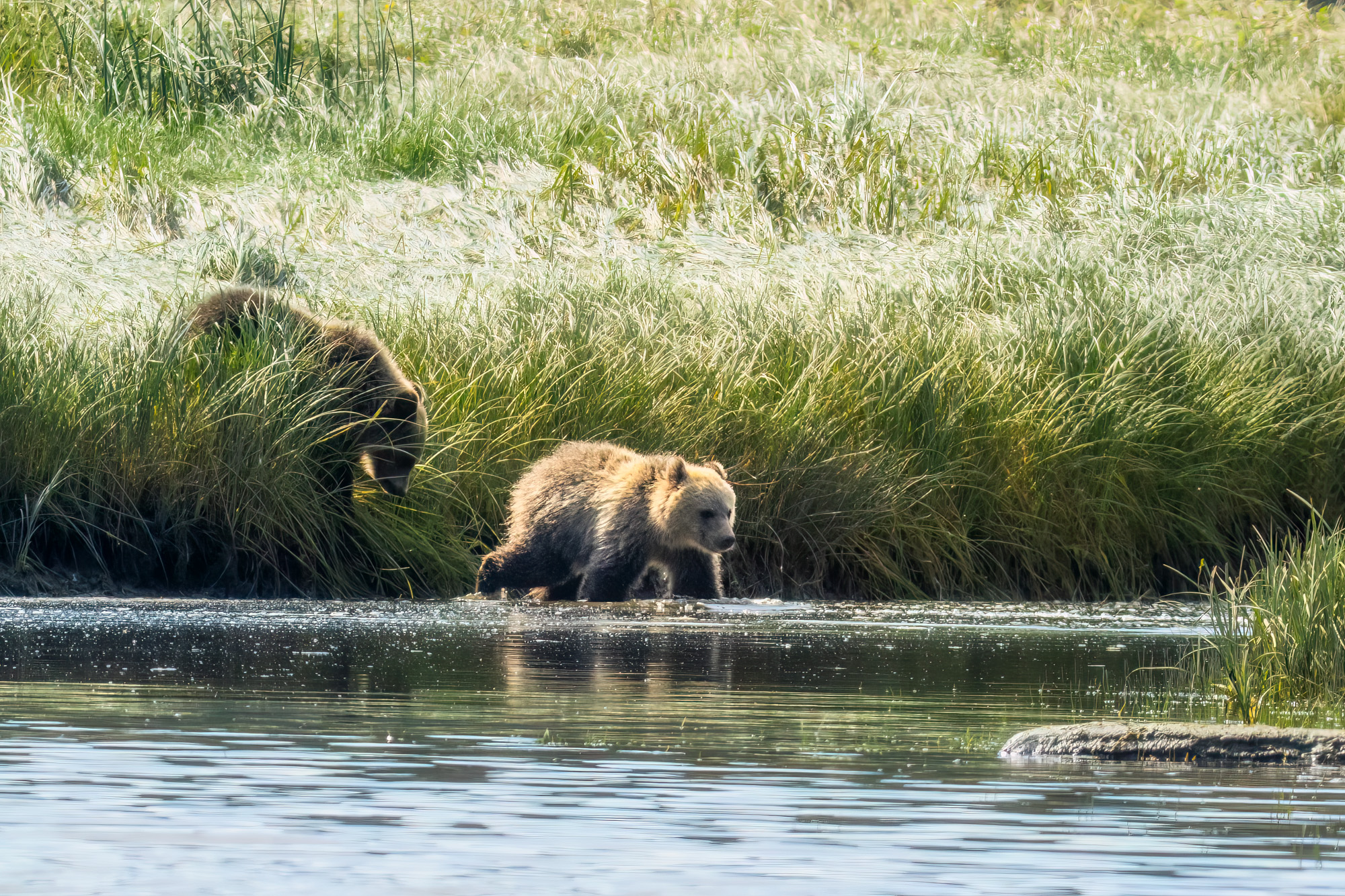
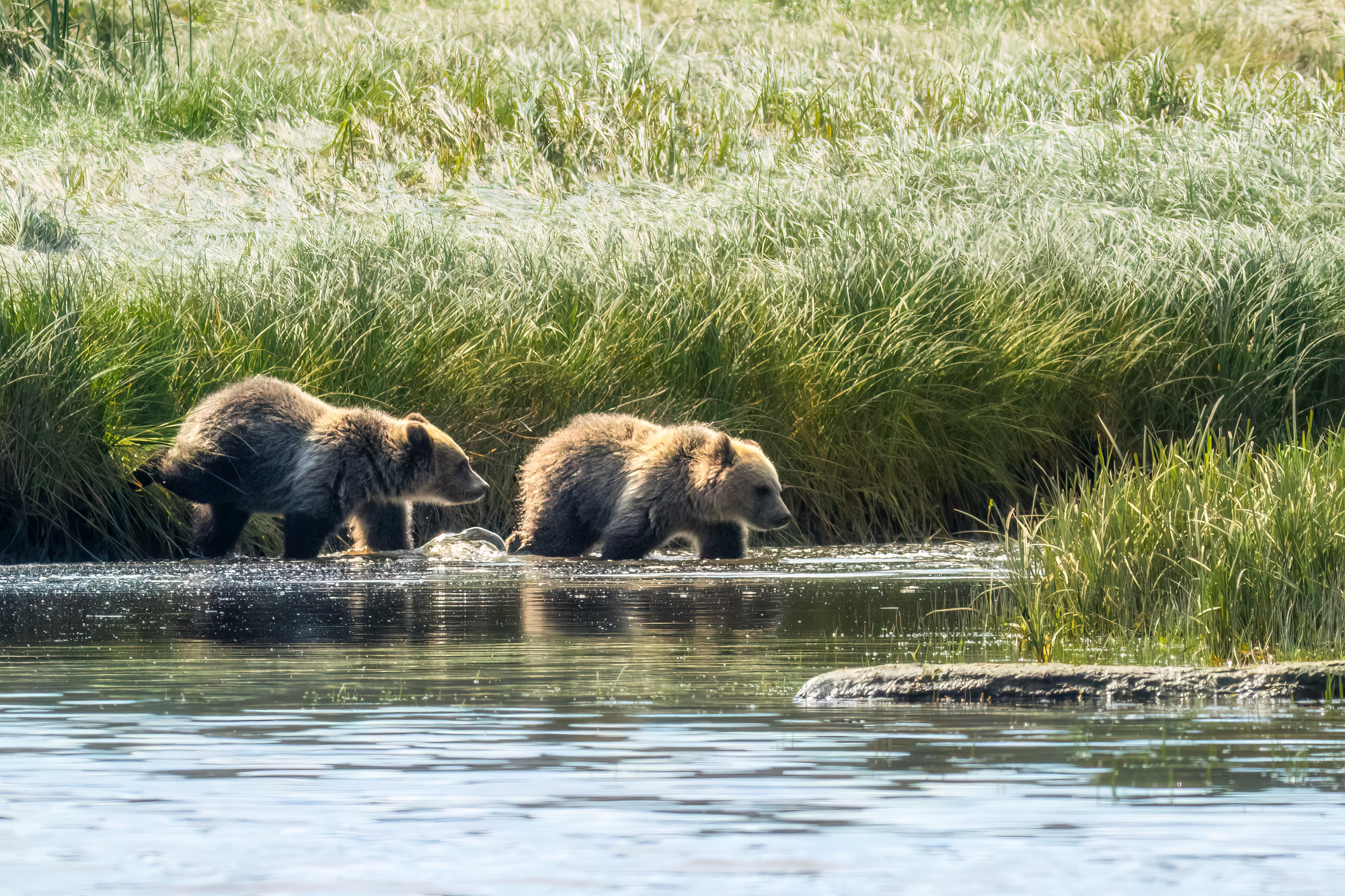
Those are the moments I love in wildlife photography — when you see something developing, you have no idea whether it will actually happen, and all you can do is be ready.
The first time we went, wind and waves made it difficult to stay offshore, so Ray ended up doing a lot of paddling while I tried to photograph bears from a moving dinghy. The second time we took our dinghy anchor, and that made both the bear watching and photography much more enjoyable.
I used my Canon 7D with the 400mm f/5.6L, one of my favourite wildlife setups. The 400mm is light enough to hand hold — for a while.
Since I’m not very strong, I like using a monopod for wildlife photography. It takes the weight of the camera while keeping it at eye level, because wildlife involves a lot of waiting followed by a few seconds when suddenly you need to be ready. When something happens, I don’t want to be lifting the camera into position. I want to already be looking through it.
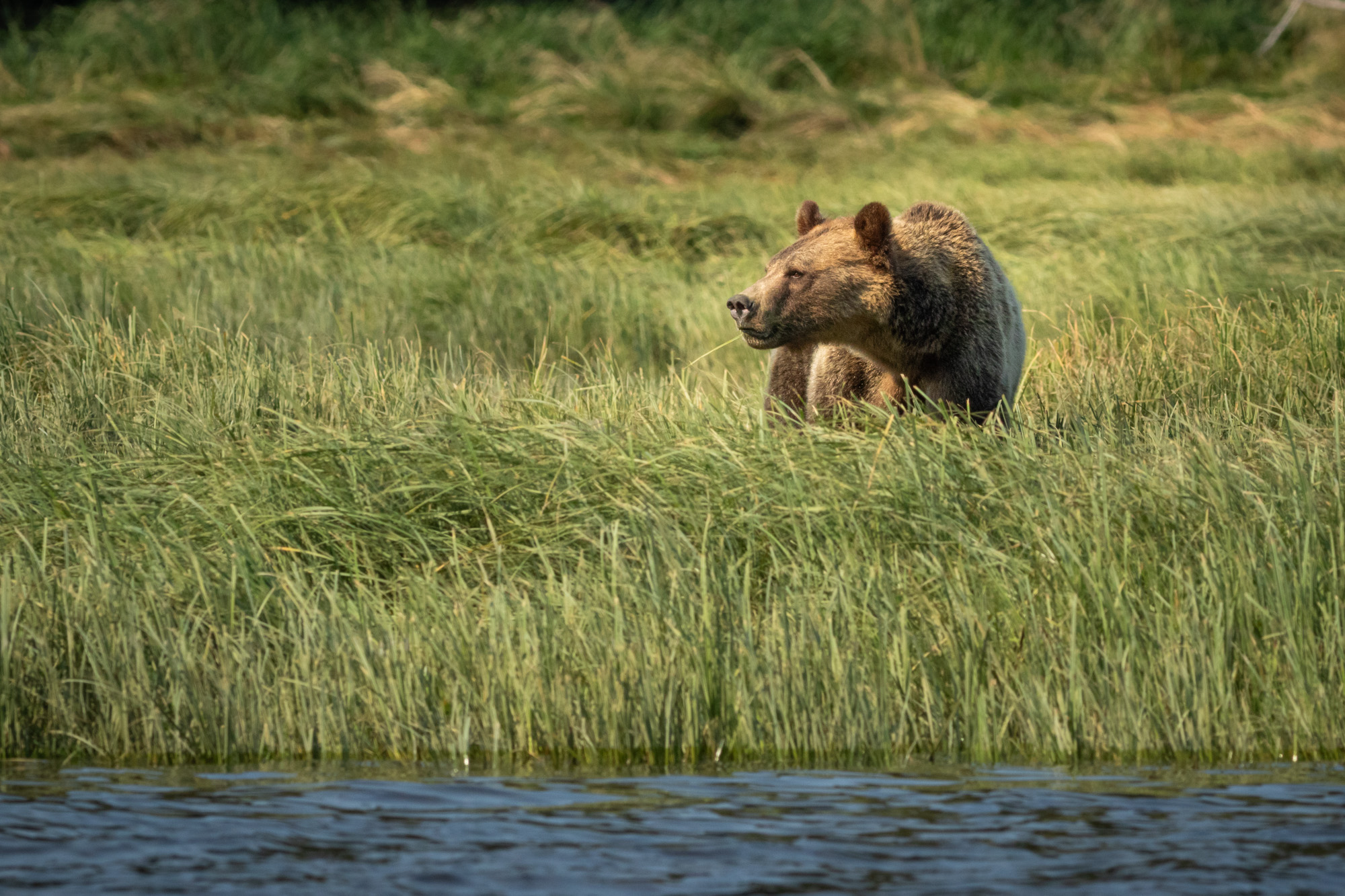
There is a fancy resort there, Glendale Lodge, and they and other commercial tour operators bring guests in to see the bears. One of the lodge operators told us that private boats were not allowed within 50 metres of shore, so we stayed outside that distance. Then we watched the commercial operators take their boats right past us and farther up into the estuary. Some of them had double-decker viewing platforms!
Going on our own certainly didn’t give us the closest view of the bears. But it did mean we could visit on our own schedule and come back again the next day. Then, when we were finished, we returned to our own boat anchored in Glendale Cove.
That part was pretty special.
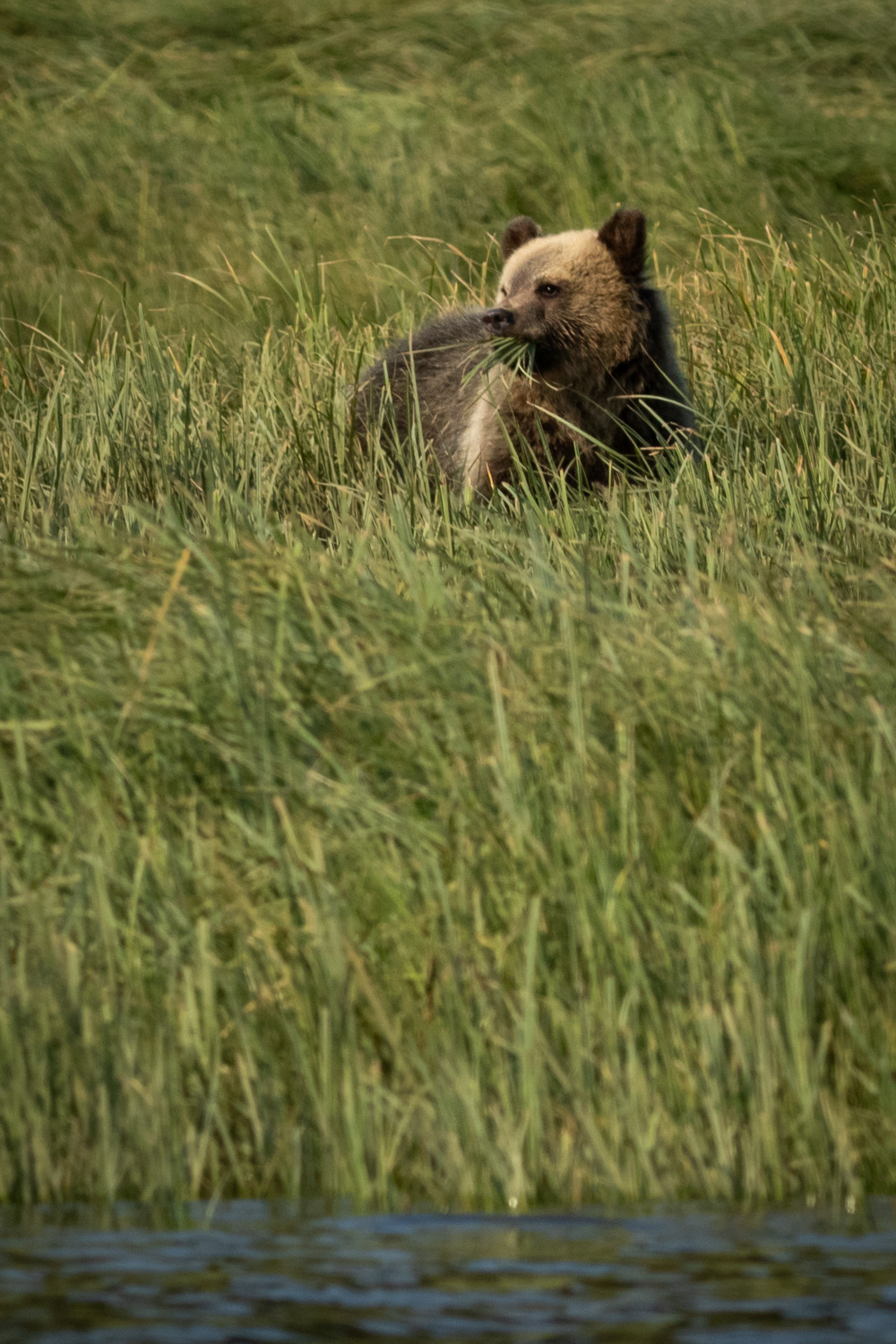
Of course, most people aren’t going to arrive at Knight Inlet on their own boat. If seeing and photographing the bears is your main goal, a bear-watching tour would probably give you a much better view. The commercial operators have boats designed for bear viewing and take guests farther into the estuary.
For boaters thinking about making the trip independently, Glendale Cove is possible, but I wouldn’t count on an easy anchorage. It is deep, there aren’t many places to put an anchor down, and the anchorage can get uncomfortable when rollers come down the inlet. There also aren’t many alternatives if you arrive and don’t like what you find.
Still, I’m glad we took the chance. We got the wild landscape, the mist and mountains, sunrise over the inlet, a few uncomfortable nights at anchor, and two little grizzly cubs finally doing exactly what I had been whispering at them to do.
Thank you for sharing this adventure Anne. What a magnificent place! it is so totally different to what I am used to hear in Africa.
Your images are brilliant . They make me feel that I am actually experiencing the time, place and environment.
Kind regards
Wally Watson
Thank you so much Wally, I appreciate your kind comments!
always enjoy your posts thank you Anne
Thank you so much Jon, your comments are always appreciated!
Dear Anne thanks for amazing photos I think I experience one of my Great Expectations.
You are most welcome Mohammed, I’m glad you enjoyed the photos.
Thanks for sharing.
Great photos of beautiful wild place.
Your narrative is a delight to read,.
I really appreciate that Gordon! I’m so glad you enjoyed both the photos and the story. Thanks for taking the time to let me know.
Congratulations Anne & Ray. Your determination and patients paid off big time! Spectacular photos of the Bears and scenery! Another successful adventure. Thank for taking me along.
Many thanks for your kind comments Bill! I love our boating adventures, both on the big boat and on the dinghy. Although the big boat is much more comfortable! So glad you are enjoying the photos and I appreciate your taking the time to leave a comment.
Thanks for taking us along on your adventures.
Thank you for reading and enjoying them, Mary, much appreciated!
enjoying traveling vicariously with you, thank you and continue.
Kaz
Glad you enjoyed it Kaz, many thanks for your comments!
Hi Anne,
Been a while since I connected. The retired life can get quite busy 🙂
Loved your story and the courage you and Ray have to follow your dreams. You have some great shots of the bears and I bet you never forget that encounter. What a privilege!
That cove really is ginormous! I can imagine how rough the waves would get with a good wind. Not for the faint -hearted!
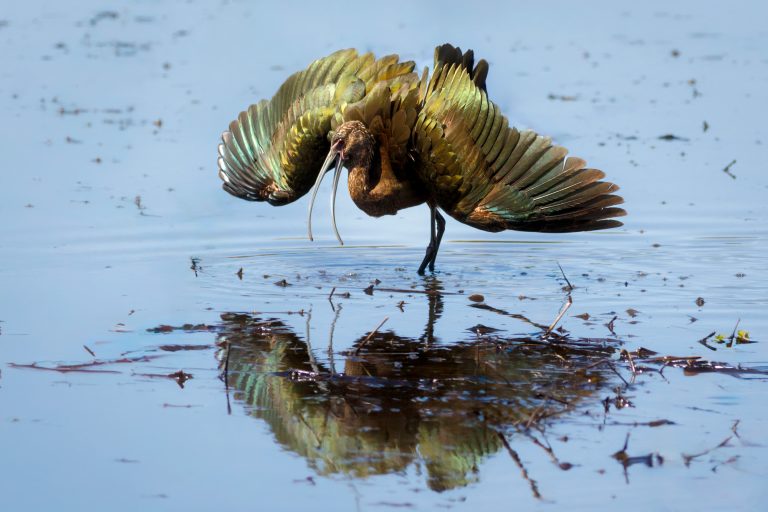
I love your bird shots too and the wide shot of the cove with the one solitary fish jumping up just at the right moment.
It’s so true-we have to be really patient for those special nature shots which can happen so quickly at any moment and it pays to be ready, but the waiting immersed in nature is so peaceful and healing that time can pass without one realizing how long you’ve been in that space!
Thanks for sharing and taking us to another space, so needed to balance out all the crazy politics and disasters…
Take care,
Cecilia
Cecilia! I sent you an email a while ago just to let you know I was thinking of you (maybe it went into your spam). So glad to hear from you. I hope you are enjoying your retirement. Thank you for your comments about my bear photos, patience, and the healing power of nature. I do love to be out in nature, even when nothing happens and the wildlife doesn’t come, being outside in wild places feels like home to me. I hope you are doing well!
Thanks for “Taking me along” Anne
You are most welcome Bill, I’m glad you enjoyed the post.
What an interesting lifestyle you have created. So glad you followed your dreams. Kelley
Hi Kelley, I’m so glad I followed my dreams too! It’s been 15 years now. I can only imagine how fast that time would have flown by if I had been doing the same thing every day. Now I have so many memories, we’ve done so many things, yet we are not rushing around. We have all the time in the world to enjoy every moment. I would much rather have this time than have the money I would have made in first career. Thank you very much for your visit and comments!
Those are great images, Anne. Congraulations. And I know how heavy that gear can get. I can no longer hold anything heavier than my 70-200 for more than a nanosecond. Arthritis in both wrists and broke the right one couple of years ago. Yay to monopods.!
I enjoy your posts so thanks for keeping them coming.
Thank you so much Melanie. Sorry to hear about your wrists, that sounds terrible! Monopods are fantastic and you would probably love a gimbal head on a tripod too. I have to get my husband to set mine up for me, but once it is there photographing wildlife is a dream.